
Markets regulator Sebi has reduced the minimum lock-in period for promoters' investment post an initial public offering (IPO) to 18 months from three years, under certain conditions. The move comes at a time when many companies are looking to list on the stock exchanges. In addition, the Securities and Exchange Board of India (Sebi) has streamlined disclosures requirements of group companies.

The Securities and Exchange Board of India (Sebi) has proposed that at least 10 per cent of corporate bond market trades by foreign portfolio investors (FPIs) should be done on the request for quote (RFQ) platform. At present, most trades in the corporate bond market are over-the-counter (OTC), creating a lot of opacity. The markets regulator has been nudging debt market participants such as mutual funds (MFs), alternative investment funds (AIFs) and brokers to use the RFQ platform to boost secondary market liquidity and transparency.

Tightening Initial Public Offering (IPO) norms, capital markets regulator Sebi on Friday cleared the proposal mandating the issuers to disclose the offer price based on past transactions and fund raising activities. In addition, the board of Sebi approved a proposal introducing an alternative mechanism by permitting "pre-filing" of offer documents for companies contemplating IPOs. Under this, an issuer should make "pre-filing" of offer documents with Sebi and stock exchanges without making it available to the public for an initial scrutiny period only.

The Supreme Court on Wednesday agreed to hear on February 17 a fresh plea of a Congress leader seeking investigation under the supervision of a sitting apex court judge against the Adani group of companies in light of the allegations made by the US-based Hindenburg Research.

The Securities and Exchange Board of India (Sebi) has mulled introduction of confidential initial public offering (IPO) filings and "pre-filing" of offer documents, a move aimed at giving issuers flexibility and alleviating concerns around privacy. Industry players said the concept, if implemented, would give a fillip to the domestic capital markets, ease the process and encourage more companies to go public. To be sure, the proposals are still at a discussion stage with Sebi just floating a consultation paper seeking public feedback.

Reserve Bank of India on Thursday said a centralised portal would be ready in three to four months wherein depositors and beneficiaries can access details of unclaimed deposits across various banks. As of February this year, about Rs 35,000 crore of unclaimed deposits were transferred to RBI by public sector banks in respect of deposits which were not operated for 10 years or more. "In order to improve and widen the access of depositors/beneficiaries to such data, RBI has decided to develop a web portal to enable search across multiple banks for possible unclaimed deposits based on user inputs," RBI Governor Shaktikanta Das said while announcing the first bi-monthly monetary policy for the current financial year.

Financial institutions at the risk of US sanctions as sharing of documents on SC directive amounts to violation of existing agreements.

The Supreme Court on Friday said it has no reason to "discredit" SEBI, which probed allegations against the Adani group, as there was no material before it to doubt what the market regulator has done and the court does not have to treat what was set out in the Hindenburg report as a "true state of affairs".

News broadcaster New Delhi Television Ltd's (NDTV's) promoter firm RRPR Holding said on Monday that it had transferred shares constituting 99.5 per cent of its equity capital to Adani group-owned Vishvapradhan Commercial (VCPL). The transaction was done on Monday, RRPR Holding said in a disclosure to the stock exchanges, in consonance with a conversion notice, dated August 23, 2022, issued by VCPL. This follows the expiry of the two-year restraint imposed by the Securities & Exchange Board of India (Sebi) on November 26, it said.

Around $200 million worth of deposits of Indian start-ups have been withdrawn from Silicon Valley Bank (SVB), which was taken over by US banking regulators last week after it collapsed, and moved to the Gujarat International Finance Tec-City (GIFT City) IFSC, Rajeev Chandrasekhar, minister of state (MoS) for electronics and information technology said on Thursday. "It turns out that there was over a billion dollars of deposits of Indian start-ups in SVB. "The existential, solvency crisis that was there six-seven days ago has become much more manageable, even the short-term liquidity crisis is being addressed as the bank allows access to deposits," the minister said while speaking at Lenovo's Tech World India Edition event.

The National Stock Exchange (NSE) has received Rs 300 crore from the Securities and Exchange Board of India (Sebi) following relief from the Supreme Court (SC), which is hearing an appeal by the market regulator in the colocation case. The court on March 20 asked Sebi to return Rs 300 crore to the NSE from the Rs 1,107 crore the exchange had deposited as part of the disgorgement in the case. The NSE had given an undertaking that it will return the entire amount to Sebi if the latter wins its appeal before the SC.
Markets regulator Sebi has empanelled as many as 16 entities -- including BDO India, Ernst & Young and Deloitte Touche Tohmatsu India -- for conducting forensic audits of financial statements of listed companies as part of efforts to curb frauds. The other empanelled entities are -- Chaturvedi & Co, Chokshi & Chokshi LLP, Grant Thornton Bharat LLP, Haribhakti & Co. LLP, KPMG Assurance And Consulting Services LLP, Mukund M Chitale & Co and Protiviti India Member Pvt Ltd, according to a public notice. In addition, Rajvanshi & Associates, Ravi Rajan & Co LLP, SKVM & Company, Suresh K Jha & Co, T R Chadha & Co LLP and V Singhi & Associates have been selected to conduct the forensic audits, it added.

A December 28 board meeting of the Securities and Exchange Board of India (Sebi) may tighten norms for initial public offerings (IPOs). The board may look to prescribe a minimum 5 per cent gap in IPO price bands, extend the lock-in period for anchor investors to 90 days and cap the amount a majority investor can sell through offer for sale. The regulator is looking at whether there can be a preferred allocation for anchor investors who opt for a longer lock-in period, said a person familiar with the matter.
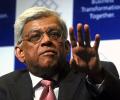
Noted banker Deepak Parekh on Thursday pitched for simpler corporate governance norms that focus more on trust than just compliance, saying economics and ethics are not trade-offs but complementary. Behind each financial crisis there is a governance failure but it is the entire system that gets impacted, because an eruption of a corporate or financial crisis almost always means a tightening of rules and regulations and increased compliance for all, he said. The HDFC chairman, who was addressing a seminar on corporate governance organised by former Sebi chairman M Damodaran's advocacy Excellence Enablers in Mumbai, stressed that the ultimate objective should be that corporate governance systems must become simpler and not more complicated.

The central government has given banks and credit card entities six to eight months to put in place the requisite reporting mechanism and related features to collect tax at source on international credit card transactions, a senior bureaucrat told Business Standard. According to the bureaucrat, the plan to bring overseas credit cards under the Liberalised Remittance Scheme (LRS) has not been mothballed and is simply being deferred so that banks get adequate time to get the system up and running. The official expects the reporting mechanism to be ready in the given time, and the rule could be implemented in the next financial year (2024-25, or FY25).

Citing news reports, Ramesh said they have "exposed" in considerable detail how the process was manipulated to help the Adanis.

US short seller Hindenburg Research has rejected Adani Group's charge that its report was an attack on India, saying a "fraud" cannot be obfuscated by nationalism or a bloated response that ignored response to key allegations. Commenting on the 413-page response Adani Group released late on Sunday evening in response to its report, Hindenburg said it believed India was a vibrant democracy and an emerging superpower with an exciting future and it was Adani Group which was holding it back through "systematic loot". Hindenburg stood by its last week's report that said its two-year investigation found Adani Group "engaged in a brazen stock manipulation and accounting fraud scheme over the course of decades".

Food delivery firm Zomato Ltd said on Wednesday most stores of its grocery unit Blinkit had resumed operations after being shut following protests by delivery partners. "Over the last few days we have made changes in the delivery partner payout structure with respect to the Blinkit business to address the needs of delivery partners, improve customer experience and reduce cancellation/ order rejection frauds by few delivery partners in the system. "Such changes are done from time to time, as needed," said the company in a letter to the BSE.

The income tax department on Wednesday conducted raids in multiple states as part of a pan-India tax evasion probe against certain registered unrecognised political parties (RUPP) and their alleged dubious financial transactions, official sources said.

In a circular dated May 20, Sebi had directed the listed companies to evaluate the impact of Covid-19 on their capital and financial resources, profitability, liquidity position, assets, and ability to service debt. Instead, companies have spoken about the number of plants, warehouses and distribution centres that have resumed operations; work-from-home and safety measures undertaken for employees; and the labour shortage they are facing.

Within two weeks of the speech, the prime minister flagged off the Pradhan Mantri Jan Dhan Yojana, and the day was marked by announcing its outcome on the very first day of its implementation.

The Supreme Court on Wednesday granted the Securities and Exchange Board of India time till August 14 to complete its probe into the allegations of stock price manipulation by the Adani group. A bench headed by Chief Justice D Y Chandrachud directed the SEBI to file an updated status report of the investigation.

Venture capital (VC) investments in Indian startups plunged over 38 per cent in 2022 as economic uncertainty and market volatility affected fundraising and investment activities, GlobalData said on Tuesday. In a statement, GlobalData said an analysis of its financial deals database reveals that "a total of 1,726 VC funding deals worth $20.9 billion were announced in India in 2022 compared to 1,715 deals worth $33.8 billion in 2021." "The ongoing economic uncertainty and market volatility continue to affect the fundraising and investment activities in India and subsequently VC investment in the country startups suffered a massive year-on-year 38.2 per cent decline in value terms during 2022," the data and analytics company said.
In 1937, a hydrogen-powered German airship flying into New Jersey caught fire and crashed, killing 35 passengers on board. It was sort of a man-made disaster as some 100 people were loaded on to a balloon filled with the most flammable material in the universe. The airship was named Hindenburg. Eight decades later, in 2017, a graduate of international business management from the University of Connecticut founded a "forensic financial research" firm to specialise in spotting wrongdoings and frauds, or what it calls man-made disasters, at companies around the globe and take market bets against them.

A mass fan following or a large number of views on a YouTube channel can't possibly constitute 'credentials'.

After a tumultuous past few days that almost halved value of the Adani group, embattled tycoon Gautam Adani-led conglomerate had some pressure eased on Friday as two global rating firms stuck with their calls on its credit profile and its French partner backed its investments in the group firms. Also for the first time since January 24, shares of the group's flagship firm Adani Enterprises ended in positive territory after erasing an intraday loss of 35 per cent. Adani Ports and SEZ also ended 8 per cent higher. This is after a over $100-billion rout in value of group stock since the US short seller Hindenburg Research accused Adani group of stock manipulation and accounting fraud.

Many senior citizens fail to disclose certain incomes like interest, commissions, or dividends in their ITRs.
The Securities and Exchange Board of India's (Sebi's) investigation into the Hindenburg allegations is making slow progress when it comes to obtaining information from overseas regulators, particularly around ultimate beneficial ownerships of certain foreign portfolio investors (FPIs), said people in the know. "Establishing ultimate beneficial ownerships for FPIs is a very complex exercise. "Several jurisdictions allow omnibus structures where the end beneficiaries are not required to be captured or are based in some other geographies.

Markets regulator Sebi on Tuesday proposed to rationalise the definition of 'promoter group' and move to the concept of 'person in control' as well as reduce the minimum lock-in periods for promoters' and other shareholders post an IPO. In a consultation paper, the watchdog has also suggested streamlining the disclosures requirement of group companies. The Securities and Exchange Board of India (Sebi) has sough comments from public on the proposals till June 10.

From the date you put in your papers, the employer will promptly freeze your salary payouts and you will get everything along with the full and final settlement.

Several Opposition leaders, including former Congress chief Rahul Gandhi, on Wednesday attacked the government over a media report claiming that a key Adani group investor is also co-owner with the conglomerate in a defence firm.

Not all companies are generous with numbers these days - they're willing to share details of their core operations, but many of them are reluctant to let shareholders get even a glimpse of newer ventures

Latest data from the Swiss National Bank showed that money parked by Indians in Swiss banks rose over 50 per cent to CHF 1.01 billion

To strengthen corporate governance practices and disclosure requirements, Sebi on Thursday decided that top-1,000 listed firms should formulate a dividend distribution policy.
The Securities and Exchange Board of India's (Sebi's) proposal to re-introduce "hard underwriting" is seen as step to boost India's moribund initial public offering (IPO) markets. The regulator has proposed that in case an IPO fails to garner full subscription, the investment banker or a third-party can buy the unsubscribed shares. This practice was common during fixed-price issues prior to 1999. However, under the new book building regime, underwriting is allowed only to the extent of shortfall due to technical rejection of bids - this is referred to as "soft underwriting" and is rarely invoked.

Digital financial services firm One97 Communications' Managing Director Vijay Shekhar Sharma has purchased 1.7 lakh shares of the company worth Rs 11 crore, according to a regulatory filing.

Sebi has now said any default of payments of interest or principal on loans taken from financial institutions, including banks, will have to be disclosed if it continues beyond 30 days.

The CAG has pulled up the union government for adopting an erroneous process of devolution of IGST to states and short-transfer of cesses to reserve funds, which resulted in under-reporting of deficit figures for the 2017-18 and 2018-19 fiscals. The Integrated Goods and Services Tax (IGST), which is levied on inter-state sale of goods and services, is shared between the Centre and states in the 50:50 ratio. In its report on the union government accounts tabled in Parliament, the Comptroller and Auditor General of India (CAG) found that a sum of Rs 13,944 crore was left unapportioned and retained in the Consolidated Fund of India (CFI) in 2018-19, even though the amended IGST Act now provides for a process for ad-hoc apportionment of IGST.

Adani Enterprises on Wednesday said it has decided to withdraw its fully subscribed Rs 20,000-crore follow-on public offer (FPO) and will return the proceeds to investors. The announcement came a day after the company's FPO was subscribed fully on the last day of the offer on Tuesday. "The Board of Adani Enterprises Ltd., (AEL) decided not to go ahead with the fully subscribed FPO.

Markets watchdog Sebi has disposed of adjudication proceedings without imposing any penalty on Reliance Industries Ltd in a matter related to alleged incorrect disclosure of diluted earnings per share in its financial results more than 13 years ago. Sebi decided not to impose any penalty for the alleged violations mainly on two grounds, including that the amendment to the relevant law that made incorrect disclosure of information by a listed company punishable came into force prospectively from March 2019. Besides, the regulator mentioned about its pending appeal before the Supreme Court against a Securities Appellate Tribunal (SAT) order.
